Best Electric Smoker in 2026: Capacity, Chip Loaders and Cold Weather Limits
An electric smoker is a well-insulated box with a heating element, a chip tray and a thermostat. It is the least romantic cooker in barbecue and the one that produces the most finished food per hour of attention, which is why it is the right first smoker for a large number of people. The trade is explicit: you give up some smoke intensity and all searing ability, and in return you get a cooker you set and walk away from, in any weather, with no fire to manage.
Three picks below at genuinely different levels of capacity and control, compared on published manufacturer specifications, capacity figures and verified owner reviews. We do not test cookers in person and we do not publish hands-on claims we cannot support.
Best electric smokers by experience level
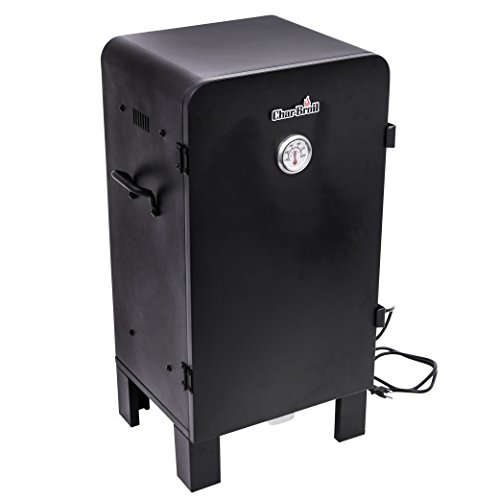


| Model | Price | Cooking area | Control | Chip loading |
|---|---|---|---|---|
| Char-Broil Analog Electric Smoker | $210.84 | Compact cabinet | Analog dial | Internal tray |
| Masterbuilt 30 inch Digital | $219.00 | 710 sq in | Digital thermostat | Side loader, door stays shut |
| Masterbuilt 40 inch Digital | $349.99 | 970 sq in | Digital thermostat | Side loader, door stays shut |
Why does the side chip loader matter so much?
Wood chips burn out in roughly twenty minutes. That is the central fact of electric smoking, and it means a six hour cook needs the chip tray fed a dozen times or more. On a cabinet without a side loader, every one of those refills means opening the main door, and every door opening dumps the chamber heat and costs the element ten to fifteen minutes to recover.
Twelve refills at fifteen minutes of lost recovery is three hours added to a cook, plus a temperature line full of dips that stretches the stall unpredictably. A side loader turns that into a two second operation that the chamber barely notices. It is the least glamorous feature on the whole cooker and the one that decides whether you keep using it.
Where the tray allows it, chunks beat chips for the same reason. A chunk smoulders for the better part of an hour instead of twenty minutes, which cuts the number of interventions by two thirds. Our chunks versus chips versus pellets comparison covers when each one is correct.
What temperature should you actually set?
Electric cabinets typically top out around 275°F, and that ceiling shapes what they are good at. Collagen-heavy cuts do not care: brisket, pork shoulder and ribs all want 225°F to 250°F anyway, and the cabinet holds those set points better than a charcoal cooker does. Poultry is where the ceiling bites, because skin needs heat to render and an electric smoker running at 225°F produces skin with the texture of a wet paper bag.
| Cut | Set point | Rough time | Pull at | USDA min |
|---|---|---|---|---|
| Pork shoulder | 250°F | 1.25 h per lb | 203°F | 145°F |
| Brisket flat | 250°F | 1.25 h per lb | 203°F | 145°F |
| Spare ribs | 250°F | 5 to 6 h | Bend test | 145°F |
| Whole chicken | 275°F | 3 to 4 h | 165°F | 165°F |
| Fresh sausage | 225°F | 2 to 3 h | 160°F | 160°F |
| Salmon fillet | 225°F | 1 to 1.5 h | 145°F | 145°F |
Run your own weight and serving time through the cook time calculator rather than working from the middle column, because thickness moves a cook further than weight does. The internal temperature chart has the full set of doneness and safety numbers side by side.
How does an electric smoker behave in cold weather?
Better than a thin offset and worse than the marketing suggests. The element has a fixed wattage, so it can only add heat at one rate. On a still 40°F day that is plenty. On a windy 20°F day, an uninsulated cabinet may not reach its maximum set point at all, and every door opening takes far longer to recover.
The correct fixes are boring: site the cabinet out of the wind, preheat for thirty minutes rather than ten, load the chamber with room-temperature meat rather than fridge-cold if the recipe allows, and buy an insulating blanket made for your exact model. Do not improvise one. Welding blankets, moving blankets and foil wraps around a live electrical appliance are a fire risk and a warranty void, and the saving is not worth it.
Who should not buy the 40 inch cabinet?
Anyone cooking for four. The Masterbuilt 40 inch is in the expert tier because the capacity argument only becomes real at a specific point: six pork butts for a party, a full run of summer sausage, or catering a family event on a schedule. Below that threshold the bigger cabinet is actively worse.
- It takes longer to come to temperature and draws more power holding a mostly empty chamber, on every single cook.
- It needs storage space that most patios and most garages do not have, and it is genuinely awkward to move alone.
- It costs $130 more than the 30 inch for a job the 30 inch already does. That $130 buys a very good thermometer and a season of wood.
- Buy it only if you already know you regularly run out of racks, not because 970 sounds better than 710.
What can an electric smoker not do?
It cannot sear, it cannot grill, and it will not give you the smoke ring or the smoke intensity of a charcoal cooker. It also has failure points a charcoal smoker does not: controllers, elements and door seals all fail eventually, and a power cut ends a cook that a bullet smoker would have shrugged off. If those trade-offs bother you, read electric versus charcoal smoker before spending anything.
What it does exceptionally well is repeat itself. Cured and low-temperature products, sausage, jerky, fish, and any cook where you want the same result every time are the electric cabinet's home ground. Pair it with a leave-in probe so the cabinet's own sensor is never the only thing you trust, and read food safety for smoking before your first long cook.
Related reading
- Best smoker for beginners: the cross-category version of this question
- Best vertical smoker: cabinets, bullets and drums compared
- How to smoke a turkey: the cook most likely to expose a cabinet's temperature ceiling
- All gear guides