Electric vs Charcoal Smoker: Convenience, Flavour and Cold Weather
This is the cheapest real decision in barbecue and the one most often decided by snobbery rather than by facts. An electric cabinet and a charcoal bullet cost roughly the same, cook the same meat, and hit the same internal temperatures. What separates them is where the heat comes from, and that single difference cascades into flavour, running cost, cold weather behaviour, what breaks, and how much you learn. Take the trade seriously in both directions: charcoal genuinely tastes better, and electric genuinely produces more good food per hour of your attention.
The Masterbuilt 30 inch Digital Electric Vertical BBQ Smoker is the default recommendation because of one feature: a side chip loader lets you add wood without opening the door, so the chamber never dumps its heat mid-cook. If you already know you want charcoal, the Weber Smokey Mountain Cooker Smoker, 18 inch is the cooker this page sends you to, and it is the one most likely to still be working in fifteen years.
How do the two cookers compare on paper?
Everything below follows from one fact: an element converts electricity into heat with no combustion, and charcoal is combustion. A cooker with no fire is easy to control, cheap to run and limited at the top end. A cooker that is nothing but fire is the reverse.
| Dimension | Electric cabinet | Charcoal bullet |
|---|---|---|
| Price of the pick on this page | $219.00 | $419.00 |
| What holds the temperature | A thermostat and a heating element | A fuel load, bottom vents and a water pan |
| Practical temperature ceiling | About 275°F on most cabinets | 350°F and beyond, wide open |
| Smoke source | Chips or chunks smouldering on a tray | Chunks burning in a live charcoal fire |
| Smoke intensity | Real but mild and very clean | Heavier, with combustion character |
| Fuel per long cook | Electricity plus a few cups of chips | About 12 lb of briquettes plus chunks |
| Running cost per cook | Cents of power and a handful of wood | Most of a bag of charcoal, every time |
| Below freezing | Element hits its ceiling and struggles | Burns more fuel and carries on |
| Power required | Yes, a live mains socket | None at all |
| Crisp poultry skin | Rarely, the ceiling is too low | Yes, run it wide open |
| Cold smoking, jerky and sausage | Excellent, the low end is controllable | Difficult, charcoal does not idle that low |
| What actually fails | Controller, element, chip loader, door seal | Rust and the thermometer grommet |
| Attention per cook | Set a number, load chips, walk away | A vent check every hour or two |
| What you learn | Very little about fire | Airflow, fuel and combustion |
What actually produces smoke flavour?
Wood does, in both cookers, and that is the sentence most of this argument forgets. Smoke flavour comes from incomplete combustion of wood. Heat a piece of hardwood without enough oxygen to burn it fully and it releases unburned particulate along with phenols, guaiacols, syringols and a long list of carbonyls. Those compounds condense on a cool, damp meat surface, and that is the taste. An electric element does not participate in that reaction at all. It just brings the wood to the temperature where the reaction happens, which is roughly 570°F to 750°F at the wood itself, not in the chamber.
So an electric smoker with a chip tray makes real smoke. What it does not make is fire. In a charcoal cooker the fuel bed is itself burning, contributing its own combustion products, its own aroma and a hotter, dirtier local environment where the wood chunk sits. Charcoal also runs a genuinely different chemistry near the coals, which is part of why a charcoal-cooked chicken and an electric-cooked chicken smell different from across a garden even when both used hickory.
Be honest about the size of that gap. It is real, it is consistent, and it is smaller than the difference between a good cook and a careless one. A pork shoulder run at a steady 250°F in an electric cabinet with three Weber Hickory Wood Chunks, 4 lb beats the same shoulder run on charcoal by somebody who let the temperature swing between 200°F and 320°F. Flavour ceiling only matters once you can reliably reach it.
One correction that costs nothing: use chunks rather than chips wherever the tray will hold them. Chips burn out in around twenty minutes and then you are opening the door every twenty minutes, which is worse for the cook than the smoke is good for it. Chunks smoulder for an hour. That comparison is worked through in wood chunks vs chips vs pellets.
The other correction: stop adding wood after the first three hours. Smoke compounds adhere to a cool, damp surface, and once the meat surface has dried and set, further wood is fuel rather than flavour. Oversmoking produces an acrid, ashtray note that no amount of resting or saucing removes, and it is far easier to do in a small sealed cabinet than people expect.
What does each one cost to buy and to run?
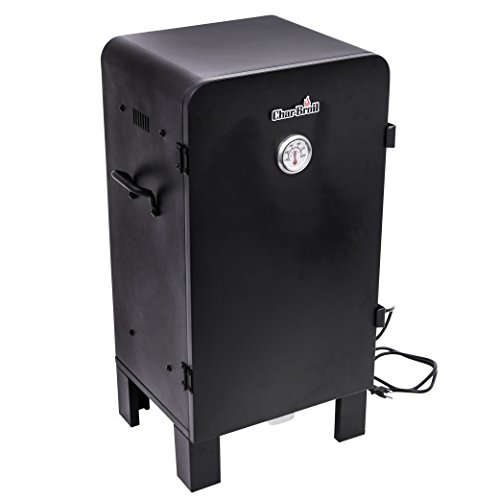
On purchase price the electric cabinet wins outright at the entry point. The Masterbuilt 30 inch Digital Electric Vertical BBQ Smoker at $219.00 gives you 710 square inches across four racks, and the Char-Broil Analog Electric Smoker at $210.84 strips it back to an insulated box, an element and a dial. The Weber Smokey Mountain Cooker Smoker, 18 inch at $419.00 costs meaningfully more for less grate area, and it is still the better long-term buy for the right person.
Running cost is where the gap widens, and it runs the other way from what people assume. Electricity is close to free in this context. A 30 inch cabinet uses an element in the 800 to 1,200 watt band, and it only draws that when the thermostat calls for heat, which on an insulated box holding 225°F is a fraction of the time. Over a 12 hour pork shoulder you are looking at a few kilowatt hours, which on any residential tariff is small change. Add a couple of cups of wood chips and the entire fuel bill for the cook is under the price of a coffee.
Charcoal is a consumable you buy on every single cook. A full ring in a sealed 18 inch bullet is roughly 12 pounds of briquettes, which is most of a standard bag, and that ring is what buys you eight to twelve hours at 225°F to 250°F. Add two or three chunks of hardwood and a chimney of lit coals to start. Cook twenty times a year and the fuel difference over a decade comfortably exceeds the purchase price gap between the two cookers.
A Kingsford Heavy Duty Charcoal Chimney Starter is not optional on the charcoal side. It lights coals with newspaper in about fifteen minutes, it removes lighter fluid from your food entirely, and lighter fluid is the single most common reason a first charcoal cook tastes of chemicals.
Which one works below freezing?
Charcoal, and it is not close. This is the clearest win on the page for the more expensive cooker, so it deserves the mechanism rather than the assertion.
A heating element is fixed wattage. It has a maximum rate at which it can put energy into the chamber, and that maximum does not change with the weather. A thin uninsulated steel cabinet in freezing wind loses heat through its walls and door seal faster than a 1,000 watt element can replace it, so the controller sits at full output and the chamber still reads below the setting. Nothing is broken. The cooker has simply run out of ceiling, and adding cold meat to it makes the gap worse.
A charcoal fire has no equivalent ceiling within the range that matters. Open the bottom vents and it consumes more fuel and releases more heat, which is precisely what you want when the outside air is stealing it. The penalty is fuel, not capability, and fuel is a problem you solve by loading more of it before you start.
| Conditions | Fuel multiplier | Charcoal for the same cook | Electric cabinet behaviour |
|---|---|---|---|
| Warm, above 70F, sheltered | 1.00x | 12.0 lb | Holds the setting with the element cycling gently |
| Mild, 50F to 70F | 1.15x | 13.8 lb | Holds the setting, element on a higher duty cycle |
| Cool, 32F to 50F | 1.35x | 16.2 lb | Slower recovery after the door opens, longer cooks |
| Freezing or windy, below 32F | 1.70x | 20.4 lb | Often cannot hold 225°F with a full load of cold meat |
Practical measures help both cookers and they are all about heat loss rather than heat input. Block the wind with a fence panel or a wall kept well clear of the cooker, preheat until the steel itself is hot rather than only the air, and stop opening the door, because recovery time in the cold is several times what it is in warm weather. A welding blanket rated for the job helps an insulated cabinet, and never use anything not rated for high heat. If you cook year round in a genuinely cold climate and want the convenience of a controller, the honest answer is an insulated cooker rather than a thicker jumper for a thin one.
Which one lasts longer, and what breaks first?
A controller dies. A bullet does not. That is the whole longevity argument, and it is the strongest case for spending more on charcoal up front.
On the electric side, the failure list is electrical. The digital controller is the most common casualty, and it is exposed on top of a hot, humid, greasy box. Elements burn out. Chip loaders seize when grease and ash bake into the tube. Door seals harden and stop sealing, which turns a well-behaved cabinet into a leaky one that cannot hold temperature in a breeze. Most of those parts are replaceable while the manufacturer still stocks them, which is the quiet condition attached to every electronic cooker.
On the charcoal side, the failure list is rust. A bullet has a lid, a middle section, a charcoal bowl, three vents and a thermometer grommet. Water sitting in the bowl is what kills them, so a cover is the single best longevity purchase you can make. Grates and charcoal rings are cheap and available, the design has been in production long enough that parts and advice are everywhere, and there is no circuit board with an end-of-life date. Fifteen years is a reasonable expectation rather than an optimistic one.
Both benefit from the same care. See how to clean a smoker for the intervals and how to season a new smoker for the oil cure that goes on bare steel before the first cook.
Does an electric smoker teach you anything?
Very little about fire, and that cuts both ways. Charcoal teaches airflow: that the top vent is an exhaust and stays fully open, that all metering happens at the bottom intakes, that you move one vent at a time in small increments and wait twenty minutes before judging the result, and that it is far easier to bring a cooker up than to bring it down. Those lessons transfer to every live-fire cooker you will ever own, including an offset. The temperature control guide covers the method in full.
An electric cabinet teaches none of that, because it does not need you to know it. What it does is clear the fire out of the way so you can learn the parts that actually decide whether food is good: trimming, seasoning rates, when to wrap, how to read a bark, and probing for doneness rather than trusting a clock. Those skills matter more to the finished plate than vent management does, and they are the ones a beginner is most likely to skip while fighting a fire.
If you know you eventually want to run charcoal or an offset, start on charcoal now and accept a rougher first year. If you want good food this month and are unsure whether the hobby will stick, the electric cabinet gets you there and costs less to abandon. The first smoker buying order and the beginner smoker setup both work through the sequence, and both put the thermometer ahead of the cooker.
Can an electric smoker do poultry properly?
Not the skin, and this is the limitation to take most seriously before you buy. The data note on a whole chicken says it plainly: Run 275F or higher if you want skin you can bite through. At 225F the skin turns rubbery no matter what you do. Most digital cabinets top out near 275°F, which is the very bottom of the range where skin renders and dries, and many struggle to hold even that with a cold bird inside them.
A charcoal bullet opens its vents and goes to 325°F and beyond without complaint, which is why charcoal is the better poultry cooker by a clear margin. Wings, thighs, spatchcocked chickens and turkeys all benefit from that headroom.
The workaround on the electric side is genuinely good, so this is not a reason to avoid the category. Smoke the bird in the cabinet until it is 15°F to 20°F short of its target, then finish it in a hot oven or on a grill for the last ten minutes. You keep all the smoke you already put on it and you get skin you can bite through. Note that poultry is 165°F at the USDA minimum with no rest required, and dark meat improves up to about 180°F, which is preference rather than safety. See how to smoke chicken for the full method and the whole chicken cut page for the planning times.
What about cold smoking, jerky and sausage?
Electric wins this outright, and it is the strongest argument in the category. Jerky wants a controllable 140°F to 175°F for hours. Summer sausage wants a slow stepped climb. Cheese and cold-smoked fish want lower still, with a smoke source and almost no heat at all. A thermostat and an element deliver those numbers and hold them without attention.
Charcoal does not idle that low reliably. A fire small enough to hold 150°F is a fire on the edge of going out, and a fire that goes out unnoticed leaves food sitting in the danger zone, which is a food-safety failure rather than an inconvenience. People do cold smoke on charcoal cookers using a separate smoke generator and no fuel in the bowl, which works precisely because it removes the fire from the equation.
Two safety points specific to this work, because it is the corner of smoking where the rules genuinely change. Fresh sausage is ground meat, so the safe minimum is 160°F rather than 145°F, and the data note calls it out because it catches people out constantly. Anything cured, including bacon, summer sausage and theme-park style turkey legs, requires a curing salt containing sodium nitrite used at the exact rate printed on the packet. Never improvise a cure recipe, and never cold smoke meat that has not been cured, because cold smoking is not cooking.
Is an electric smoker cheating?
No, and it is worth putting the objection to rest properly rather than politely. A smoker has exactly two jobs: hold a temperature and burn wood cleanly. An element holds a temperature better than most people manage a fire in their first year, and the wood supplies every bit of the smoke in both cookers. Nothing about a live fire is required for the chemistry that makes smoked meat taste smoked.
What charcoal adds is combustion character on top of that, which is a real and worthwhile difference. What it also adds is fuel cost, a learning curve, an hour of lighting and stabilising before the meat goes on, and a cooker that wants checking. Deciding those are worth it is a preference, not a moral position. Plenty of people who cook excellent barbecue on charcoal keep an electric cabinet in the garage for jerky and sausage, which tells you what the category is actually for.
Who should buy which?
Buy the electric cabinet if this is your first smoker, if the goal is good food rather than a hobby, if you want to smoke on a weeknight after work, if jerky and sausage are on your list, if you cook mostly in mild weather, or if you have a household that expects dinner at a predictable hour. Buy it if you would rather spend your Saturday on the food than on the fire.
Buy the charcoal bullet if you want the flavour ceiling, if you cook year round in a cold climate, if crisp poultry skin matters to you, if you want a cooker with no electronics that will outlast its manufacturer, or if learning airflow is part of the appeal. It is also the right buy for anyone who expects to move to an offset later, because everything charcoal teaches you transfers directly.
Buy both eventually and most people do, in either order. The two cookers cover each other's weaknesses so cleanly that owning one of each is a more sensible upgrade path than buying a bigger version of whichever you started with.
Who should not buy the charcoal smoker?
Charcoal is the enthusiast's choice and the more expensive one here, which makes it the option most often bought for the wrong reasons. Skip it if any of these describe you.
- You cook on weeknights only. A charcoal cook starts with fifteen minutes in a chimney and another thirty stabilising before meat goes on. That hour has to come from somewhere, and on a Tuesday it usually means not cooking at all.
- You want jerky, sausage or cheese. The low end of charcoal is exactly where it is least reliable, and this is the work an element does best. Buying charcoal for this is buying the wrong tool.
- You have nowhere to store fuel. Charcoal takes bags, bags take dry space, and damp briquettes light badly and burn worse.
- You are cooking on a balcony or anywhere with restrictions. Many rental agreements and local rules treat open-flame cookers differently from electric ones. Check before you buy, not after.
- You will only use it a few times a year. Fire skills decay between cooks. Six cooks a year on charcoal means being a beginner six times, while an electric cabinet performs identically on cook one and cook forty.
The reverse warning matters too. Do not buy an electric smoker if you cook through a cold winter, if crisp skin on poultry is central to what you make, if power cuts are routine where you live, or if you already know the milder smoke will nag at you. Buying the convenient cooker and then resenting the food is the most expensive outcome on this page.
One more caution on the capacity trap. The Masterbuilt 40 inch Digital Electric Vertical BBQ Smoker is the right cooker for batch sausage runs and catering, and the wrong cooker for a family of four: a bigger cabinet takes longer to come to temperature, draws more power holding an empty chamber, and needs storage space most patios do not have. Check your real headcount with the smoker size calculator before you assume bigger is better.
Both sides of this comparison, at two budgets each



Is there a cooker that does both?
There is, and it is worth knowing about before you commit to either column. A gravity-fed charcoal cabinet feeds briquettes from a vertical hopper into a fire box, with a fan and a digital controller metering the airflow. You set a number the way you would on an electric smoker, and charcoal supplies the heat and the character. The Masterbuilt Gravity Series 600 Digital Charcoal Grill and Smoker is the mainstream example.
The catch is price and complexity. You are paying substantially more than either cooker on this page, and you are reintroducing every electrical failure mode the charcoal column was free of: a controller, a fan, a temperature probe and a power cord. It is a genuinely good answer for somebody who wants charcoal flavour with set-and-forget behaviour and has the budget, and a poor answer for a first smoker.
Related pages
- Best electric smoker for the picks on the convenience side, compared on capacity and chip loading
- Best charcoal smoker for bullets, drums and gravity-fed cabinets compared
- Temperature control guide for the vent method a charcoal cooker needs
- Wood chunks vs chips vs pellets for why chunks beat chips in both cookers
- Pellet grill vs offset smoker for the same trade one price tier up
- Internal temperature chart for USDA minimums and texture targets side by side