Best Wood Pellets for Smoking in 2026: Blends, Ash and Burn Rate Compared
Pellets are the only part of pellet grilling you buy again and again, which makes them the running cost of the whole hobby and the one place a bad decision repeats itself every cook. Three things separate a good bag from a bad one: what wood is actually in it, how much ash it leaves, and how much moisture it carries. Flavour name on the front of the bag is the fourth thing, and it matters least.
Below are three bags at genuinely different price points, two more worth knowing about, and the part most roundups skip: what the burn rate does to your fuel budget, and which species belongs with which meat. Everything here is compared on published product specifications, stated wood content and verified owner reviews. We do not test in person.
Best wood pellets by experience level


What actually differs between one bag of pellets and another?
Start with what does not differ. Every cooking pellet is compressed sawdust held together by lignin, the wood's own binder, released by pressure and heat in the die. Food grade pellets contain no glue, no wax and no accelerant, and any bag claiming a special binder is either confused or not a cooking pellet.
What differs is the mix. Many blends use a cheap base wood, usually oak or alder, with a percentage of the named flavouring wood pressed in. That is not dishonest and it is not a defect: oak burns evenly and cleanly, which is exactly what you want carrying a milder flavour wood. But it does mean a bag labelled apple is often mostly oak, and a brand that presses whole log including bark will read noticeably stronger at the same grill temperature. That is the entire reason Lumber Jack Competition Blend sits in the expert tier here rather than the value one.
Then there is ash. Ash is the non-combustible mineral content left in the burn pot, typically under one percent by weight on a good pellet and noticeably more on a poor one. On a twelve hour cook burning ten pounds of fuel, the difference between 0.5 percent and 1.5 percent ash is the difference between a burn pot that keeps drawing air and one that chokes, drops the fire, and leaves you with a cold chamber at 4am. Ash is not a cleaning inconvenience, it is a temperature stability issue.
Finally moisture. Pellets leave the mill dry and pick up humidity from the air afterwards. Damp pellets burn cooler, produce more steam and less smoke, and eventually swell enough to jam an auger. Nothing on the bag tells you how a pallet was stored between the mill and your porch, which is why the storage section below matters as much as the brand.
How much fuel will you actually burn, and what does it cost?
Burn rate scales with how hard the fire has to work. That means it scales with your set point first, and then with ambient temperature, wind and whether the grill body is single wall or insulated. Here is the arithmetic on a real cook rather than a shrug.
| Grate temperature | Pellets per hour | 8 hour cook | 17 hour brisket | Cost at $1.25 per lb | Typical use |
|---|---|---|---|---|---|
| 180°F | 0.5 lb | 4 lb | 8.5 lb | $10.63 | Smoke setting, cheese, nuts |
| 225°F | 0.8 lb | 6.4 lb | 13.6 lb | $17.00 | Brisket, pork shoulder |
| 250°F | 1.0 lb | 8 lb | 17 lb | $21.25 | Most low and slow cooks |
| 275°F | 1.3 lb | 10.4 lb | 22.1 lb | $27.63 | Poultry, hot and fast ribs |
| 350°F | 2.0 lb | 16 lb | 34 lb | $42.50 | Roasting, wings |
| 450°F | 3.0 lb | 24 lb | 51 lb | $63.75 | Searing, pizza |
Read the 250°F row carefully. A fourteen pound packer at 250°F runs roughly seventeen hours, which burns about seventeen pounds of pellets. A 20 pound bag of Kingsford Craftsmoke covers that with three pounds spare in mild weather and does not cover it at 20°F in wind. Running a hopper dry is not a minor inconvenience: the fire goes out, the chamber cools, and you may end up throwing food away. Always start a long cook with a full hopper and a full spare bag.
Work your own numbers with the pellet usage calculator, and see the pellet consumption chart for the same figures broken out by cooker size and season.
Which wood goes with which meat?
The useful way to think about species is intensity first, flavour second. A strong wood on a delicate protein is the most common flavour mistake in smoking, and it is not reversible: over-smoked fish tastes like an ashtray and no rest or sauce fixes it. Match intensity to the meat, then pick a flavour inside that band.
| Wood | Intensity | Flavour | Best with | Avoid on |
|---|---|---|---|---|
| Alder | 1 of 5 | Delicate, slightly sweet | Salmon, white fish, vegetables | Beef, anything long |
| Apple | 2 of 5 | Mild, fruity | Pork, poultry, ham | Beef ribs |
| Cherry | 2 of 5 | Mild, sweet, darkens bark | Pork, poultry, everything | Nothing, it is the safe default |
| Maple | 2 of 5 | Sweet, subtle | Poultry, pork, sausage | Long beef cooks alone |
| Oak | 3 of 5 | Clean, balanced, classic | Brisket, beef ribs, anything | Delicate fish |
| Pecan | 3 of 5 | Nutty, richer than fruit woods | Pork shoulder, poultry, ribs | Light fish |
| Hickory | 4 of 5 | Strong, bacon-like | Pork, ribs, beef in a blend | Fish, chicken breast |
| Mesquite | 5 of 5 | Very strong, earthy | Short hot beef cooks | Long cooks, poultry, fish |
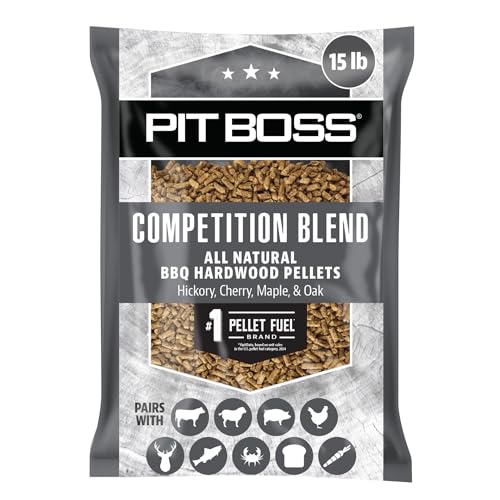
Full pairings with reasoning are in the wood flavour chart and the wood pairing guide. If you want one bag that never fights anything you cook, buy a cherry-heavy blend such as Pit Boss Competition Blend and learn your grill before you start chasing single species.
How do you get more smoke flavour out of a pellet grill?
Accept the premise first: a pellet grill burns cleanly and will never produce the smoke volume of a charcoal fire or an offset. Within that constraint, four things genuinely work, in order of effect.
- Cook lower for the first three hours. Smoke output falls sharply above about 250°F. Running 180°F to 225°F while the meat surface is still cool and moist is when the most smoke adheres.
- Start with cold meat and a dry surface pat. Smoke compounds condense onto a cool surface. A brisket straight from the refrigerator collects more smoke in its first hour than one left on the counter.
- Use a stronger pellet. A whole-log pellet reads heavier than a heartwood blend at the same temperature. This is the honest use case for the expert tier.
- Add a smoke tube. A perforated tube of smouldering pellets adds smoke independent of the controller, which is the only way to get smoke at a high set point.
What does not work is choking the exhaust or running the grill dirty. Both produce creosote rather than smoke flavour, and creosote tastes acrid and bitter in a way that does not fade with rest.
What changes in cold weather, on a balcony, or when cooking for a crowd?
Cold weather is the big one. An uninsulated single-wall grill such as the Z GRILLS ZPG-550B2 can burn half again as many pellets below freezing, and wind takes a bigger bite than air temperature does. Two practical responses: run 250°F instead of 225°F so the cook finishes before the fuel does, and site the grill behind a windbreak. A double-wall body like the Traeger Ironwood 885 exists specifically for this problem, which is why we place it in the expert tier of our pellet grill roundup rather than calling it a general upgrade.
On a balcony, storage is the constraint rather than burn rate. Twenty pound bags absorb humidity fast in an unheated outdoor box, so buy 15 pound bags more often rather than stockpiling, and decant into a sealed gasket bucket immediately. Check your building rules too: many prohibit any solid-fuel cooker on a balcony, and that includes pellet grills.
For a crowd, the arithmetic changes because you are running longer and hotter. Four pork butts at 250°F for fourteen hours in a full chamber burns more than one butt does, because the grill works harder to hold the set point against the thermal load. Add 20 to 30 percent to the table figures for a fully loaded cooker and buy the extra bag.
How should pellets be stored?
In a sealed container with a gasket, off the floor, out of direct sun. Concrete wicks moisture upward, so a bag on a garage floor is a bag slowly getting damp. A five gallon bucket with a sealing lid holds roughly a 20 pound bag and costs less than the fuel it protects.
Empty the hopper if the grill is going to sit for more than a couple of weeks, especially in humid conditions. Pellets left in a hopper through a wet season swell, bridge, and jam the auger, and clearing a jammed auger is a genuinely unpleasant job. A fitted heavy duty pellet grill cover helps, but it protects the grill rather than the fuel: a cover keeps rain off a hopper lid, it does not keep humidity out of the pellets inside.
A quick field test: drop a few pellets in a glass of water. Good dry pellets sink and then break apart into sawdust fairly quickly. Pellets that float or feel soft between your fingers have taken on moisture and belong in the garden, not the hopper.
Who should not buy the competition pellets?
Anyone who has not yet decided they want a heavier smoke profile. Whole-log pellets that include bark genuinely read stronger, and on a long cook that strength compounds hour after hour. The fastest route to an acrid, over-smoked brisket is a strong pellet on a seventeen hour cook run by someone still learning their grill, and you are paying roughly twice the price per pound for the privilege.
- Skip it if most of your cooking is poultry or fish. Heavy smoke on chicken skin and salmon is the least forgiving combination there is.
- Skip it if you are still dialling in temperature control. Fix the fire first: an unstable cook plus a strong pellet produces bitterness you will misdiagnose as a rub problem.
- Skip it on your first brisket. Seventeen hours is a long time to be wrong about smoke intensity, and there is no way to take it back out.
- Buy it once you have cooked enough to find house blends too polite, which is a real and common conclusion after a season.
What are the common mistakes with pellets?
- Storing bags on a concrete floor. The single most common cause of auger jams and weak fires.
- Topping up a stale hopper. Old damp pellets at the bottom feed first. Empty it and start clean before a long cook.
- Judging flavour at 350°F. There is very little smoke at that temperature, so you are comparing bags on a cook that cannot show a difference.
- Never cleaning the burn pot. Accumulated ash starves the fire of air, causes temperature swings, and eventually causes a failed ignition with a hopper full of unburned fuel.
- Chasing flavour before fixing the cook. Buying a specialty bag will not fix a grill swinging 40 degrees. Read the temperature control guide first.
- Assuming the bag name is the wood. Read the stated wood content, not the front of the packaging.
What else is worth knowing in this category?
Two more bags round out the picture. One is a widely stocked three-wood blend at a low price per pound, which matters more than it sounds when you need to restock mid-season without ordering. The other is Traeger's own Signature Blend, which moves in and out of stock on Amazon and so links to current listings rather than a fixed page. We would rather send you to a live search than invent a product page that might not have a buyable offer behind it.
Also worth knowing about

Related reading
- Chunks versus chips versus pellets: which format belongs in which cooker
- Best pellet grill: the machine that burns all of this
- How to smoke a brisket: the cook that empties a bag fastest
- Best grill cover: keeping water out of the hopper
- All gear guides